At the market: canned tomatoes, and which ones to trust
Demetrio
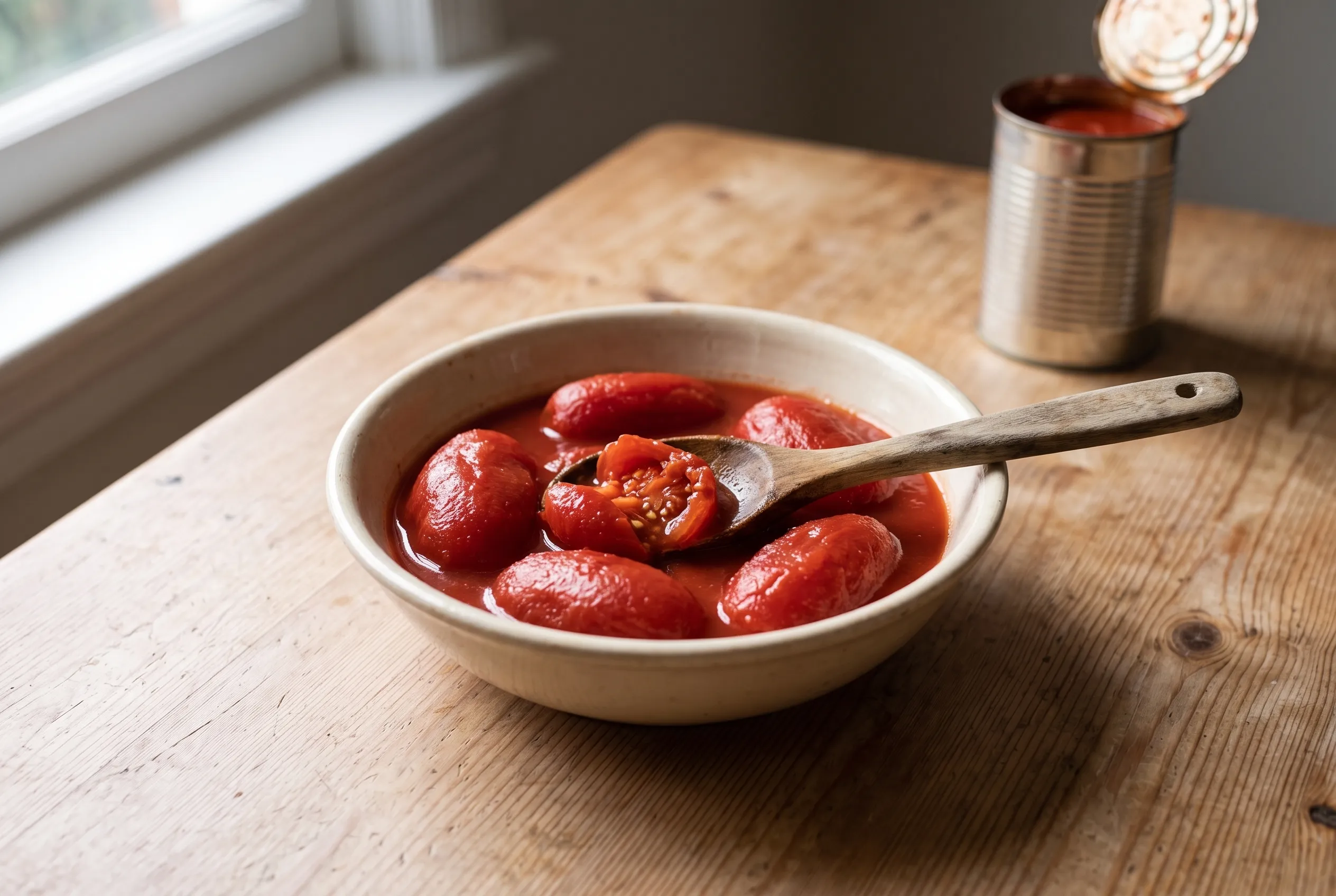
For most of the year, the most trustworthy tomato in an American supermarket is in a can. This is not a defeat. A tomato picked ripe in August and sealed the same week has more to say in January than a tomato picked green in another hemisphere and taught to look red on the journey.
The trouble is the label. “San Marzano” is the most generous word in the canned goods aisle, and a good part of the cans that carry it have never been near the place.
What the name means
San Marzano is a variety, long and pointed, with few seeds and firm flesh. It is also a protected name. The certified kind is grown in a small area between Naples and Salerno and is sold as Pomodoro S. Marzano dell’Agro Sarnese-Nocerino D.O.P.
On a certified can, look for three things:
- that full name, with D.O.P., not just “San Marzano” in large letters;
- the seal of the consortium that oversees it;
- the tomatoes whole or in long fillets, peeled. The certified tomato is not sold crushed, diced or as purée.
“San Marzano style”, “San Marzano type” or “San Marzano tomatoes” with a small “grown in USA” further down are the variety, or a cousin of it, grown somewhere else. Some of them are perfectly good. They are simply not what the large print implies, and they should not cost what the large print asks.
What to buy
Buy whole peeled tomatoes, certified or not, from a brand you have tasted and liked. Italian brands are easy to find and are a reasonable place to start; an honest American whole tomato is better than a doubtful San Marzano.
Two things to leave on the shelf. Diced tomatoes are usually treated with calcium chloride so the cubes hold their shape, and they hold it in the pan too, long after you wanted them to give up and become sauce. Crushed tomatoes vary from brand to brand more than anything else in the aisle; some are fine, many are mostly paste and water.
Open the can and look before you cook. Good tomatoes are a deep, even red, the liquid is thick rather than watery, and they break apart under a wooden spoon without needing to be argued with. A basil leaf in the can is a tradition, not a guarantee.
Passata, and the paste in a tube
Passata is raw tomato, sieved and bottled, with nothing else in it. It is sold in glass jars, usually beside the cans, and it is not the same thing as American tomato purée or tomato sauce, which are cooked and often seasoned. Read the ingredients: tomatoes, perhaps salt, and that is all.
Tomato paste is worth buying in a tube rather than a can. You will use a spoonful at a time, and a tube keeps in the fridge for weeks where an open can becomes a small science project by Thursday.
The same rule, elsewhere
Tomato sauce is one of the three basic preparations in the book, explained once and used throughout. It asks for no special tomato. It asks for an honest one, and the can is where you are most likely to find it.